Reviewed by Erich
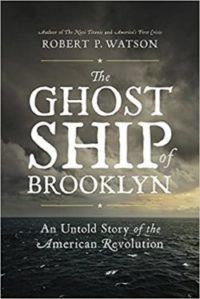
The Ghost Ship of Brooklyn is a fascinating narrative of a surprisingly obscure chapter in the history of the American Revolution.   The author tells the story largely from the accounts of 5 separate prisoners of war who were held on the HMS Jersey, a British Warship that was gutted (‘hulked’ was the term used in the book).   As many as 15 smaller British ships, were also hulked and along with the Jersey, served as floating prisons.    Over the 7 years between 1776 and 1783, these ships served in this despicable capacity and were moored at Wallabout Bay on the East River in Brooklyn.Â
Read the review »
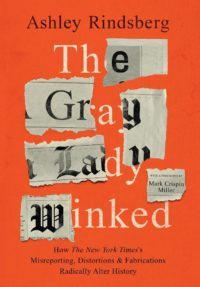
Reviewed by Matthew
To hear Ashley Rindsberg tell it, the story behind his journey to get The Gray Lady Winked published was rife with trials and tribulations, and after reading it, it isn’t hard to see why. Rindsberg, a well-traveled author and journalist, …
Read the review »
Reviewed by Marcia and Matthew
This is a good time for a new book about First Ladies. They are the forgotten heroes (or is it heroines) of American history, largely eclipsed by the brighter light cast by famous husbands. Their stories have not received the attention they deserve.
Read the review »
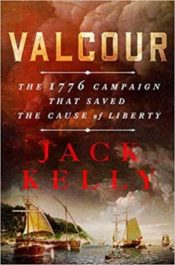
Reviewed by Martin
Jack Kelly’s latest history has done as much for Benedict Arnold’s reputation as Kenneth Robert’s Arundel. The difference being, Arundel was a historical novel and Valcour is a thorough treatment of the 1776 campaign to prevent the British from
…
Read the review »
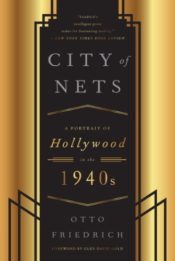
Reviewed by Marcia
The City of Nets is funny, poignant, historically accurate and totally engrossing. The fantasy characters Hollywood projected on the screen were not as improbable as the people who transformed a California desert into an oasis of dreams, beguiling the nation and the world.
Read the review »
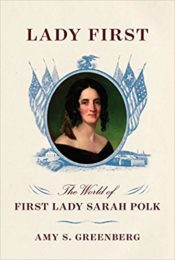
Reviewed by Marcia
Amy Greenberg shows Sarah Polk as manipulative, scheming, deceptive, cunning and devoid of inconvenient compassion. But she also depicts a bright, sociable, and charming woman of her time, and in a regal way, attractive.
Read the review »
Reviewed by Martin
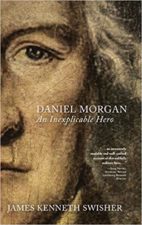
Dr. James Swisher, inspired by the life of Daniel Morgan, wrote an engaging new biography, Daniel Morgan An Inexplicable Hero, which is being published this year posthumously by his son and family. Morgan was a giant in every sense of the word. He participated in many critical events of the American Revolution (The Siege of Quebec, Saratoga, and Cowpens). He transcended his humble beginnings and earned the respect of his compatriots and his enemies.
Read the review »
Reviewed by Marcia
It is not true that “no one can speak honestly about race.†Thomas Sowell does that and more in this book of essays. “Facts matter,†he writes in the Preface, especially when they challenge widely held beliefs based on false premises.
Read the review »
Reviewed by Martin
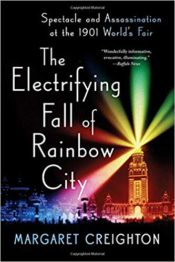
Creighton focuses on the societal and cultural significance of the Buffalo fair but stops just short of drawing unsupported conclusions and says what she has to say in a plausible and thoughtful manner. Creighton weaves her observations throughout her tale of assassination, romance, kidnapping, and crazy women riding the rapids of Niagara Falls. And, if that's not enough, there are lions and tigers, elephants, monkeys and socialists.
Read the review »
Reviewed by Marcia
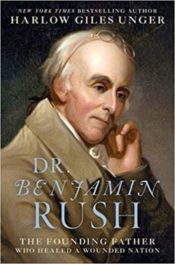
As one of the 56 signers of the Declaration of Independence, Dr. Benjamin Rush
qualifies as a Founder. Yet, few people today know his name. That is unfortunate because he was a remarkable man and his memory should be preserved. That is what historian Harlow Giles Unger intended by writing this biography.
Read the review »


 The posts are coming!